Adaptive optics summer camp
Setting up a new wavefront sensor at UC Santa Cruz's Adaptive Optics Summer Camp, measuring a room full of eyeballs, and reminiscing with the redwoods.
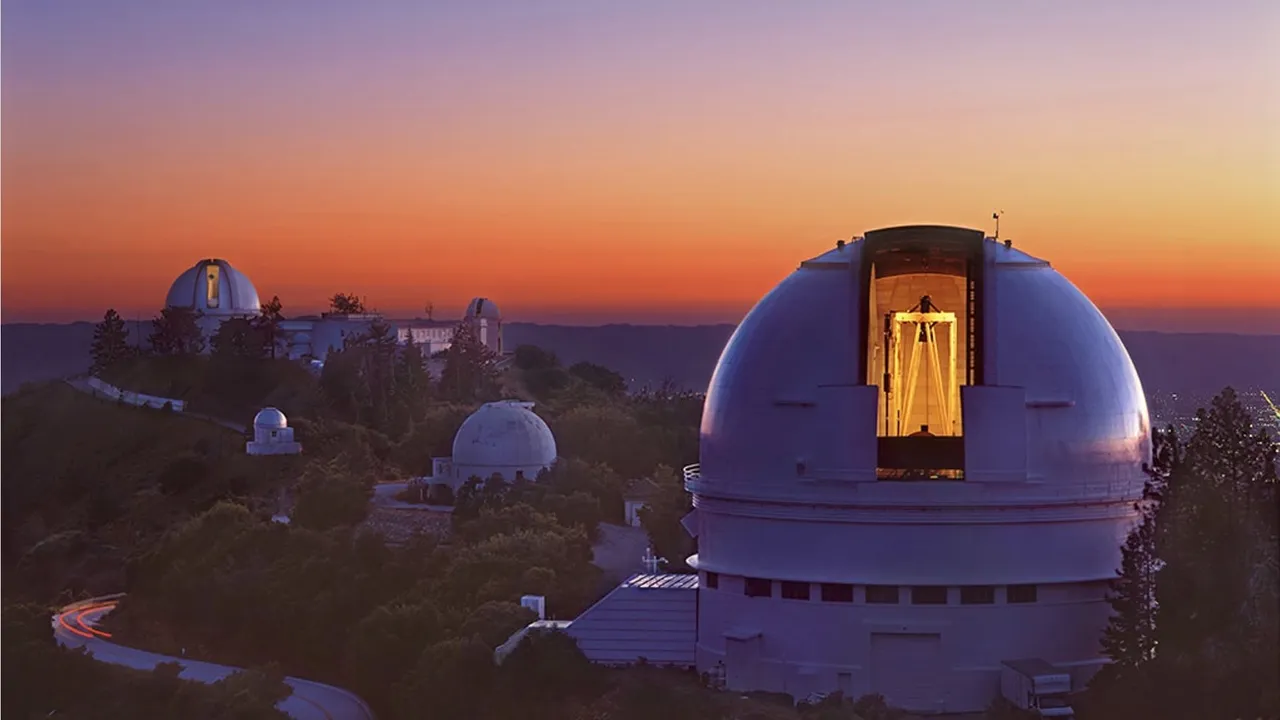
Sun Sep 13 - Written by: Celia Sagastume
I spent almost 20 years in the Bay Area and never once visited the UC Santa Cruz campus, so I had no idea what I was in for when Austin sent me there this summer to work and attend the Adaptive Optics Summer Camp on campus.
The campus is literally inside a redwood forest.
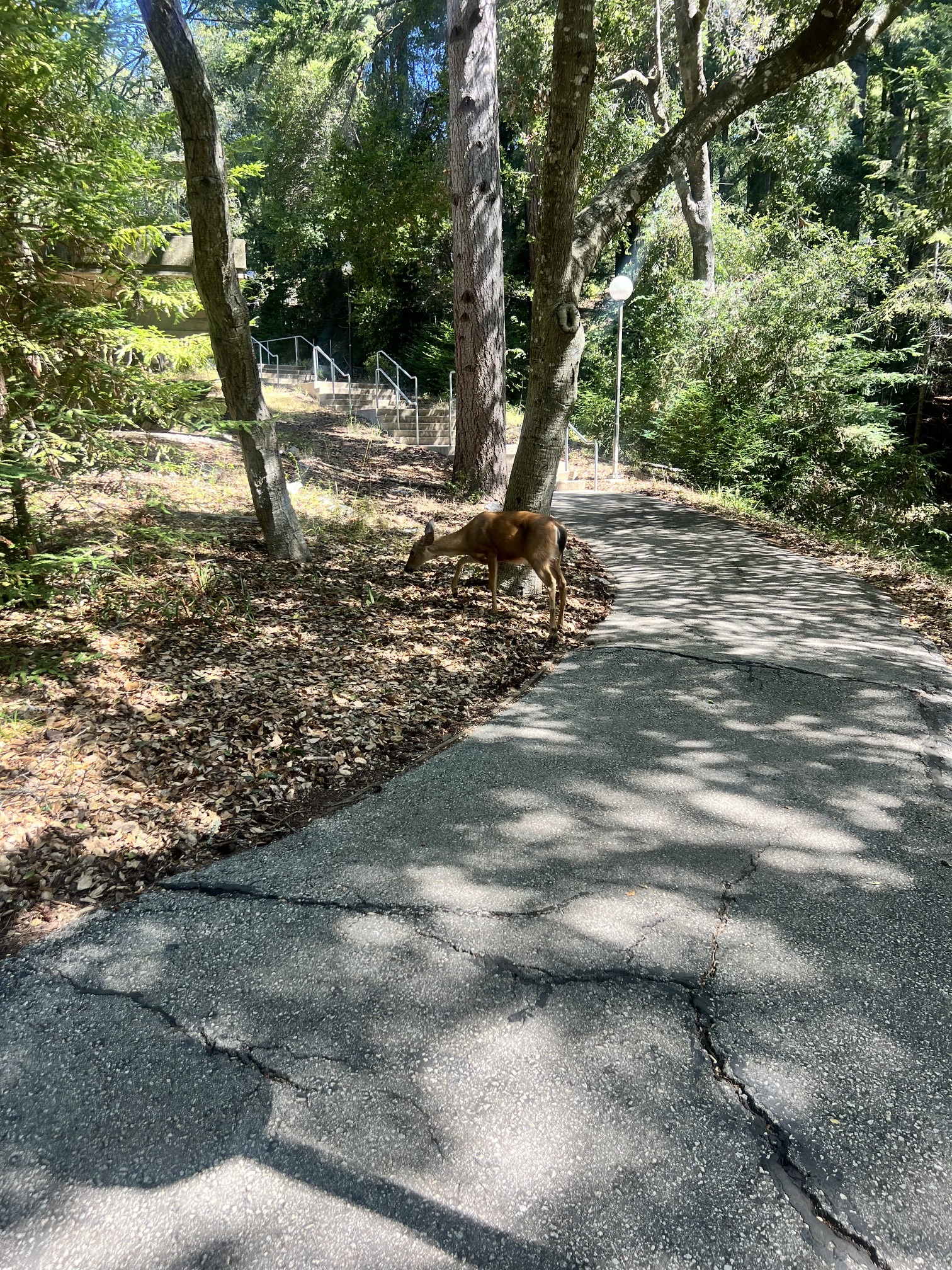
The summer camp takes place before the beginning of the fall semester, so the students on campus are replaced with deer, wild turkeys, and banana slugs. I woke up every morning in a misty northern Californian dream, fully indulging in my nostalgia over the place I called home for the last two decades.
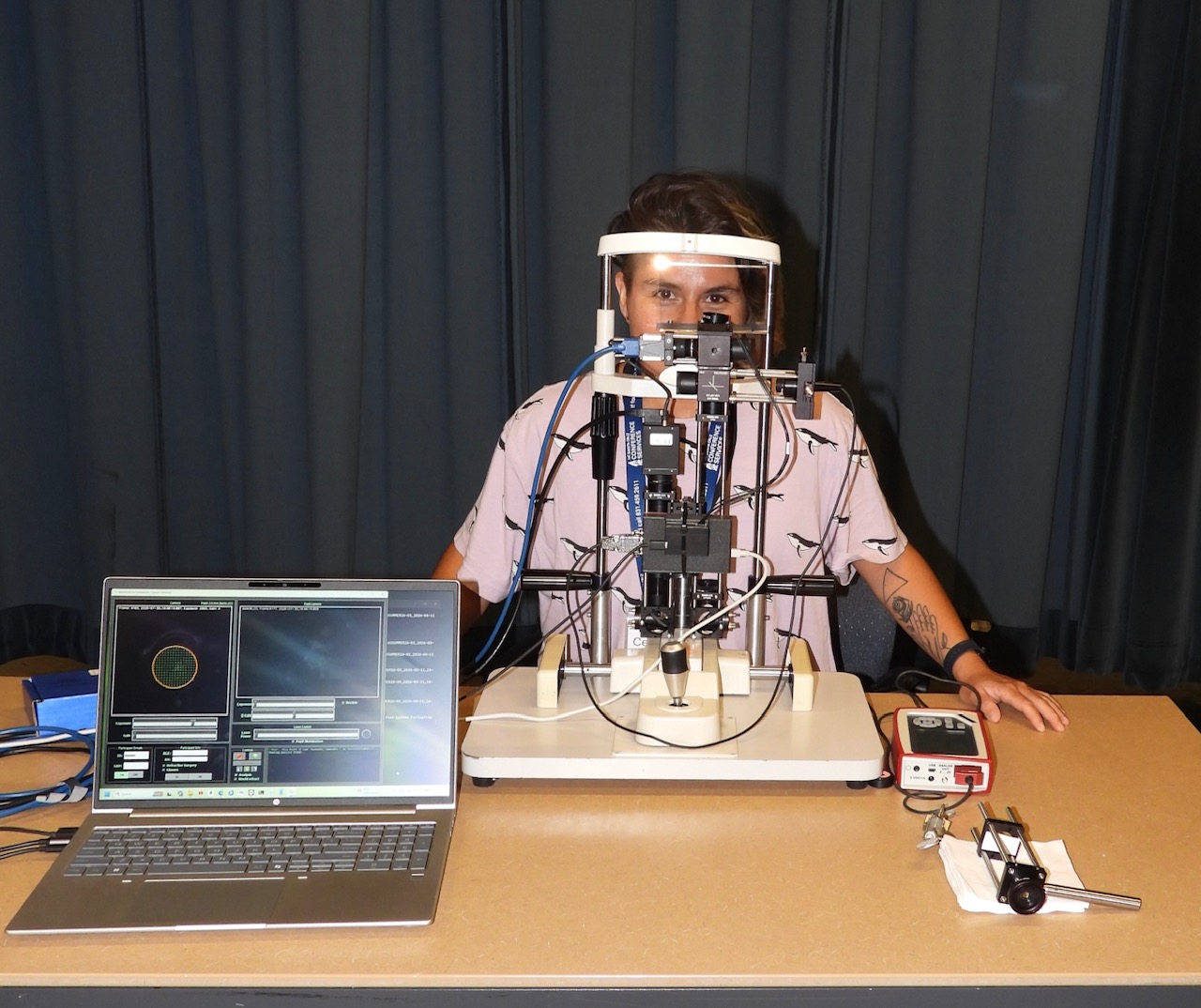
I arrived the week before the start of camp to help set up the wavefront sensor for the school. Every year, Austin would drive down from UC Berkeley with a wavefront sensor in the backseat, ready to measure students’ eyeballs and give personalized reports on wavefront aberrations. This year, it would be my turn to take the helm.
A new wavefront sensor was built according to Austin’s design, which would have a permanent home at the Adaptive Optics center at UCSC. Austin and I spent the better part of June and July prepping for my arrival: I built a new software package for live visualization and data processing, we built a model eye together for calibrating wavefront sensors, and I spent a lot of time reading background literature on Zernike polynomials, wavefront sensing, and Shack-Hartmann lenslets.
And we still scrambled to get the sensor up and running in time for the conference.
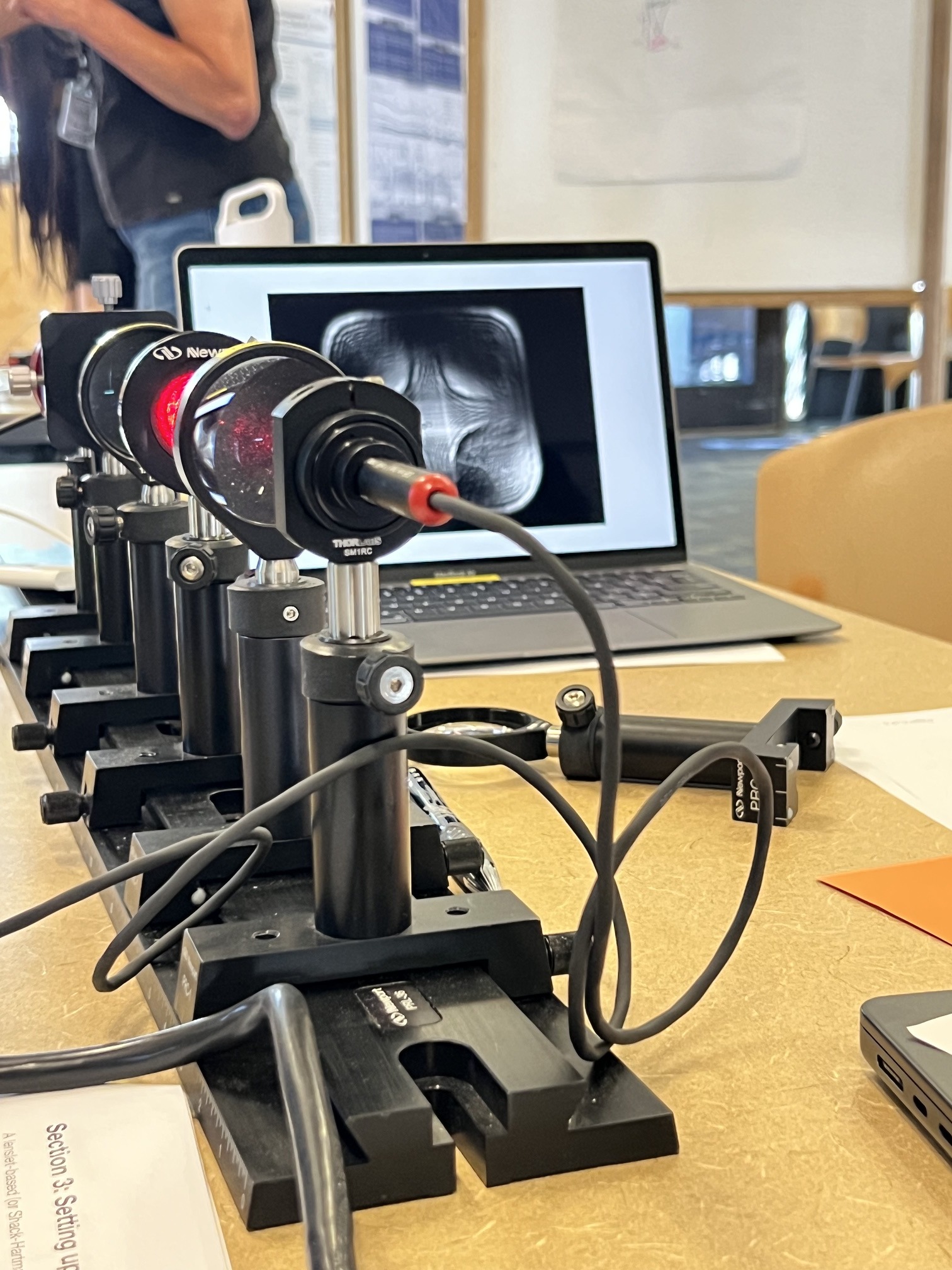
There are so many more points of adjustment for a wavefront sensor than I thought possible. You can move the IR source to better align it with your optical array. You can adjust the focal length of the telescope to focus the spots on the sensor. You can adjust the aperture of the pupil conjugate to limit the corneal reflection of the source beam. You can adjust the shutter speed and gain of your cameras. And the whole thing can misalign again when you move it from one spot (your lab) to another (the conference area).
But we got it done. And I was able to attend most of the Adaptive Optics conference, which was such a fantastic experience. There’s a big focus on astronomical applications of adaptive optics at the camp. Wavefront sensors were first developed to measure the aberrations introduced by our atmosphere, which degrade the signal quality of telescopes pointed at distant stars.
Nowadays, the same tech is being refined and redeveloped to also look at exoplanets, which are much harder to spot. They are found not in light, but in its absence, in the barely perceptible dimming of a distant sun, where the conspicuous lack of light may indicate the presence of another world where life may be possible.
This year, I was the only Vision Science student in attendance, which made the conference that much more fascinating to me. I met an optics student from the University of Rochester working on controlling laser pulses to energize particles at the femtosecond scale, an astronomy student at the University of Hawaii looking for exoplanets, and a project manager working on the next telescope design for Keck.
And all of them were fascinated by the idea that I could use the same technology to measure the aberrations of their own eyes, generate a point spread function of their retina, and give them a personalized report of their own Zernike polynomials.
I learned a lot that week in Santa Cruz. The lectures were excellent, varied, and wonderful. The speakers were brilliant scientists and engineers working on projects they were clearly very passionate about. The hands-on exercises were informative and engaging.
But best of all was the company. Meeting students from all over the world, all working on such varied and interesting projects, all eager to spend a week out of their summer to sit in a conference area and learn about wavefront sensing and telescopes and lasers. They were the best.